

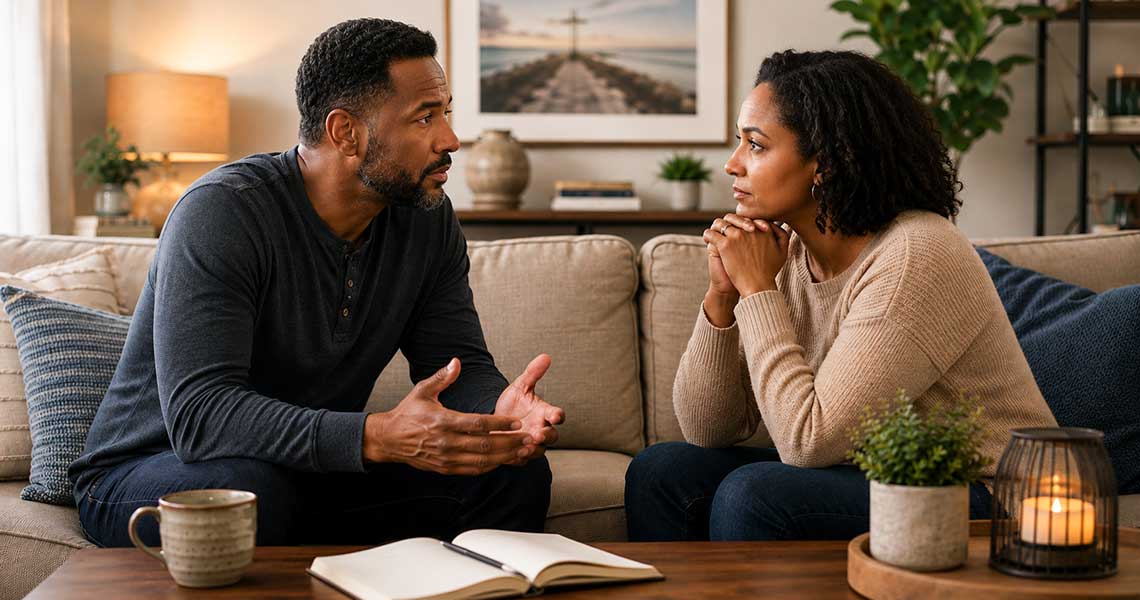
You’re sitting at dinner with your spouse when they casually mention they forgot to pick up milk. Somehow, that simple statement turns into an argument about responsibility, respect, the dishes, money, and who does more around the house. Before you know it, neither of you remembers how the conversation started.
If everything seems to turn into an argument, your marriage may not be broken—you may simply be stuck in a conflict cycle.
Conflict itself isn’t the enemy. Every marriage has disagreements. The real question is how you handle those disagreements and whether you know how to reconnect when things go wrong.
For Christian couples, this is more than a communication issue. How we respond to one another is an opportunity to live out the love, patience, humility, and grace God calls us to demonstrate.
7 Signs You’re Stuck in an Unhealthy Conflict Cycle
You may be caught in an unhealthy pattern if:
- Small issues become major fights. A disagreement about dinner somehow becomes a debate about your entire marriage.
- You argue about the same things repeatedly. The dishes, finances, parenting, or household responsibilities seem to come up again and again.
- You attack each other personally. “You forgot to call” becomes “You’re selfish and unreliable.”
- One or both of you shut down. Instead of resolving the issue, someone withdraws completely.
- You lose track of what started the argument. The conversation spirals until the original issue disappears.
- Arguments end without resolution. You stop talking because you’re exhausted rather than because the problem has been addressed.
- Defensiveness becomes your default. Instead of listening or accepting responsibility, you immediately defend yourself or counterattack.
Recognizing these patterns is important because you cannot change a cycle you refuse to recognize.
What Are You Really Fighting About?
Many marital arguments aren’t actually about the issue on the surface.
The argument may appear to be about dishes, money, chores, or forgotten errands. But underneath it may be a deeper question:
“Do you appreciate me?”
“Do I matter to you?”
“Can I count on you?”
“Do you hear me?”
“Are we really a team?”
James 1:19 gives Christian couples a powerful starting point:
“Everyone should be quick to listen, slow to speak and slow to become angry.”
Before trying to prove your point, slow down enough to discover what your spouse is actually trying to communicate.
Stop Fighting Your Spouse and Start Fighting the Cycle
When conflict begins escalating, remember: your spouse is not the enemy. The destructive pattern is.
Instead of thinking, “How do I win this argument?” ask, “How can we understand each other and protect our marriage?”
Try these practical steps:
- Soften your approach. Address the specific behavior instead of attacking your spouse’s character.
- Listen for something you can affirm. Look for the part of your spouse’s perspective that makes sense.
- Validate before explaining. You can acknowledge your spouse’s feelings without necessarily agreeing with everything they believe.
- Watch your body language. Eye-rolling, scowling, sarcasm, and crossed arms can escalate tension before you say another word.
- Take a healthy pause. If either of you becomes overwhelmed, agree to step away and return to the conversation later.
- Make repair attempts. Say, “I don’t want this to become a fight,” “Can I start that over?” or simply, “I love you, and I want us to work through this.”
- Look for the deeper issue. Ask, “What is this really about for you?”
Let Grace Change the Way You Fight
Ephesians 4:2–3 calls believers to be humble, gentle, patient, and committed to maintaining unity. Those qualities don’t become irrelevant when you’re angry with your spouse. In fact, that’s when you need them most.
Proverbs 15:1 reminds us, “A gentle answer turns away wrath.” Sometimes the most powerful thing you can do in an argument isn’t say more. It’s lower your voice, soften your heart, and choose a response that builds rather than destroys.
You won’t eliminate every disagreement in your marriage. But you can learn to disagree without becoming enemies.
Build a Marriage Where Repair Comes Quickly
Healthy marriages aren’t conflict-free marriages. They are marriages where husbands and wives learn to reconnect after conflict.
So the next time an argument begins over something seemingly insignificant, pause. Take a breath. Look at your spouse. Remember that you’re on the same team.
Then ask yourself: “Am I trying to win this argument, or am I trying to love my spouse?”
Choose love.
Choose humility.
Choose grace.
And choose to break the cycle.
Your marriage doesn’t need perfect communication. It needs two people who are willing to keep turning toward each other—and toward Christ.
A Challenge for This Week
The next time you and your spouse disagree, resist the urge to defend yourself immediately. Instead, listen, validate what you can, and make one intentional repair attempt before the conversation escalates.
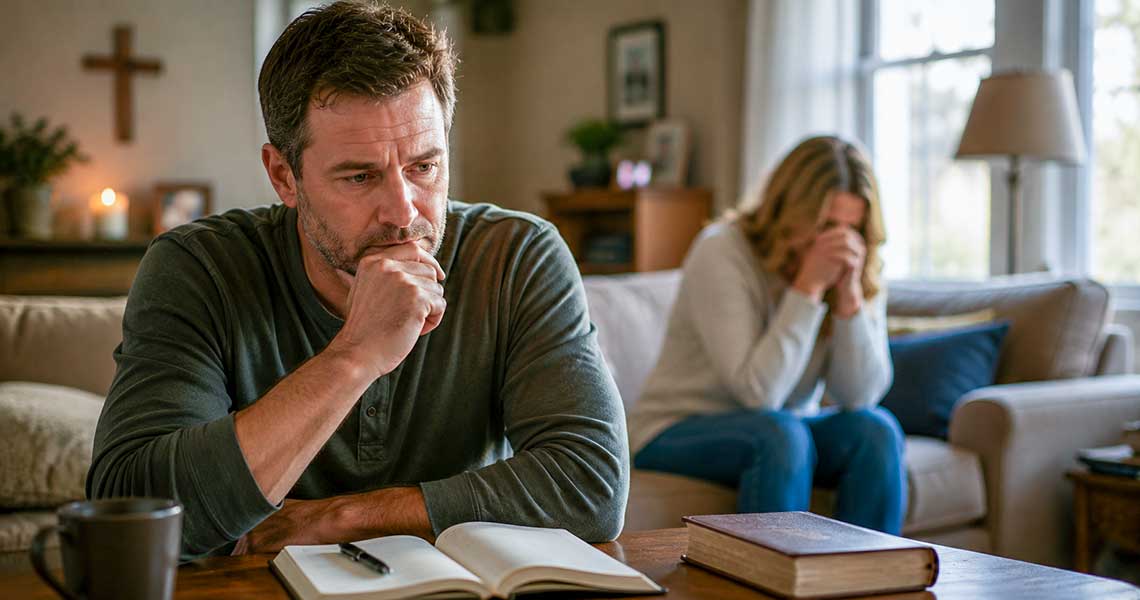
Pray together and ask God to help you become the kind of spouse described in Colossians 3:12–14—compassionate, kind, humble, gentle, patient, and clothed in love.
Don’t wait for the next argument to change your marriage. Start changing the cycle today.







Leave A Comment
You must be logged in to post a comment.